Writing Advice from Ray Bradbury

Author Ray Bradbury has done it all– novels, non-fiction, short stories, and more. In “Telling the Truth,” the 2001 keynote address at Point Loma Nazarene University’s Sixth Annual Writer’s Symposium by the Sea, he shares frank, practical writing advice. He’s laugh-out-loud funny, occasionally profane, but his advice is profound and well worth absorbing.

Here is a quick outline of a few primary points. Don’t miss his talk, though. It’s peppered with wonderful anecdotes, interesting people, good humor, and vivid language.

  1. Write short stories, not novels, first.
  2. You may love another author, but you can’t be them.
  3. Study high-quality short stories by classic authors (he provides specific recommendations).
  4. Stuff your head with good stuff.
  5. Fire the friends who don’t support you.
  6. Live in the library, not in front of a screen. He “graduated from the library.”
  7. Fall in love with old movies.
  8. Do what you do with love, and write with joy. If writing starts feeling like work, scrap it and start something else.
  9. Don’t focus on making money, but on writing. The story of his trip to New York City and the sale of his first two books is inspiring.
  10. You can deal with the ten things you love, hate, fear, or almost remember by writing them into stories.
  11. Surprise yourself. Type what comes into your head–intuition and word association can spark many ideas. You don’t know what is in you until you test it. Bradbury said his first film wasn’t good, but it was a beginning.
  12. You write for readers. What you’re writing for, even if you don’t know it, is for at least one person to love what you do. And you must love it too.

I love his opinionated commentary about short story writers, perhaps because he shares my taste for classic authors, metaphors, and stories that go somewhere.

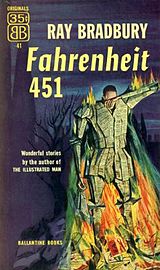
If you've never read anything by Ray Bradbury, my pick for "must read" is Fahrenheit 451.

My favorite tip is to “stuff your head with good stuff.” He suggests that if you read one short story, one good, classic poem, and one essay before bedtime for the next one thousand nights, you’ll have a wealth of material to work with. I’ve been teaching for years that “input must come before output,” and Bradbury offers concrete examples of how to make it happen.

Bradbury’s joy in reading and writing are contagious, and mental snapshots of dandelions, King Kong, Bill Gates (“I don’t do Windows”), an enthusiastic barber, a destroyed face, and Gene Kelly are vivid reminders of his gift. This video is part of the University of California Television (UCTV) series.

Libraries raised me. I don’t believe in colleges and universities. I believe in libraries . . . I went to the library three days a week for 10 years. (Ray Bradbury)

Share

Time Management Strategies for Freelancers and Entrepreneurs

Do the most important tasks first.How can you get everything done in a one-person business? When you look at corporations with separate departments for research and development, marketing, human resources, accounting, and more, it’s hard to imagine that a freelancer could possibly fill all those functions alone. If you focus on ROI (return on investment) and implement a few time management strategies, though, it can be done.

The reality of a one-person business is that it can be messy– interruptions happen. If you have a time management plan and a few strategies in place, crises and interruptions won’t derail your productivity. Take time to think through which of your activities gives you the highest ROI. Is it writing a new book? Teaching a workshop? Ghostwriting a full-length book for someone else? Working on your blog so that you can connect with your audience? Editing a manuscript? When you know which activities are most profitable, you can focus on them.

For most people, 20% of what you do in your business produces about 80% of your income, but it’s hard to stay focused on the profitable 20%. The other 80%– bill paying, shipping, customer service, filing, and other administrative tasks–clamors for attention, and must be done. My personal system for getting things done could be described as a divide and conquer method of management in which I divide tasks by category, prioritize based on profitability, do the most important things first, and outsource things that are not directly income producing.

You can find a brief, informal overview of the system at my Do What Matters, Make it Pay blog. The post is a response to a fellow writer’s question, so doesn’t cover everything, but is a start. You can find it at http://doingwhatmatters.com/2012/02/how-get-all-done-oneperson-business.

Do you have any tips for time management that you’d like to add? Feel free to leave them in the comment section below.

Share

You Need a Business Website–Really

People aren't looking for you in a phone booth any more; the internet is where they're browsing! No matter what kind of writer or editor you are, or what kind of business you’re in, you need a business website. And no matter what your budget or skill level, you can create a simple business website. Even if you’re in a very traditional market niche, potential clients like having the ability to look online to learn more about you.

The easiest kind of site to put up is a blog-based site that you can edit with the ease of writing an e-mail. If you’re a member of NAIWE, you already have this kind of site– it’s what I’m writing on now. The NAIWE sites all feature the same professional design with an internet address (URL) of yourname.naiwe.com. They serve not only as a business website, but also as evidence that you belong to a relevant professional association.

There are other simple blog-based sites available, some of them totally free. These include Blogger.com, WordPress.com. Weebly.com and others. These allow you the same point and click ease of the NAIWE sites, but most have long URLs such as yourblogname.blogspot.com, which is dead giveaway that you’re using a free public space for your site.

Having a free web address isn’t entirely professional, but if it’s all you can do at the moment, at least purchase your business name as a URL and forward it to your free blog (you can do this with your NAIWE blog as well). You can read about how to purchase your domain at my Do What Matters, Make it Pay blog. When you’ve purchased the domain name, just go into GoDaddy’s Domain Manager (if that’s where you purchased the domain) and click on “Forwarding.” Fill in the address of the page you want your domain name to open; click “Save,” and you’re done.

Now www.BusinessName.com will point directly to your free website, and it will be the only address you’ll need to put on your business cards. That way, when you’re able to move into a new site on your own domain, you won’t have to change cards, and you can just stop the forwarding by canceling it your domain manager.

After you move to your own domain, use the old free domain as a pointer site to your primary site. Copy excerpts from each of your new blog posts with “Read more . . . ” links attached so that your old free blog site can continue driving traffic to your new site.

If you want to be an entrepreneur, it helps to have the basics in place. Enjoy!

Share